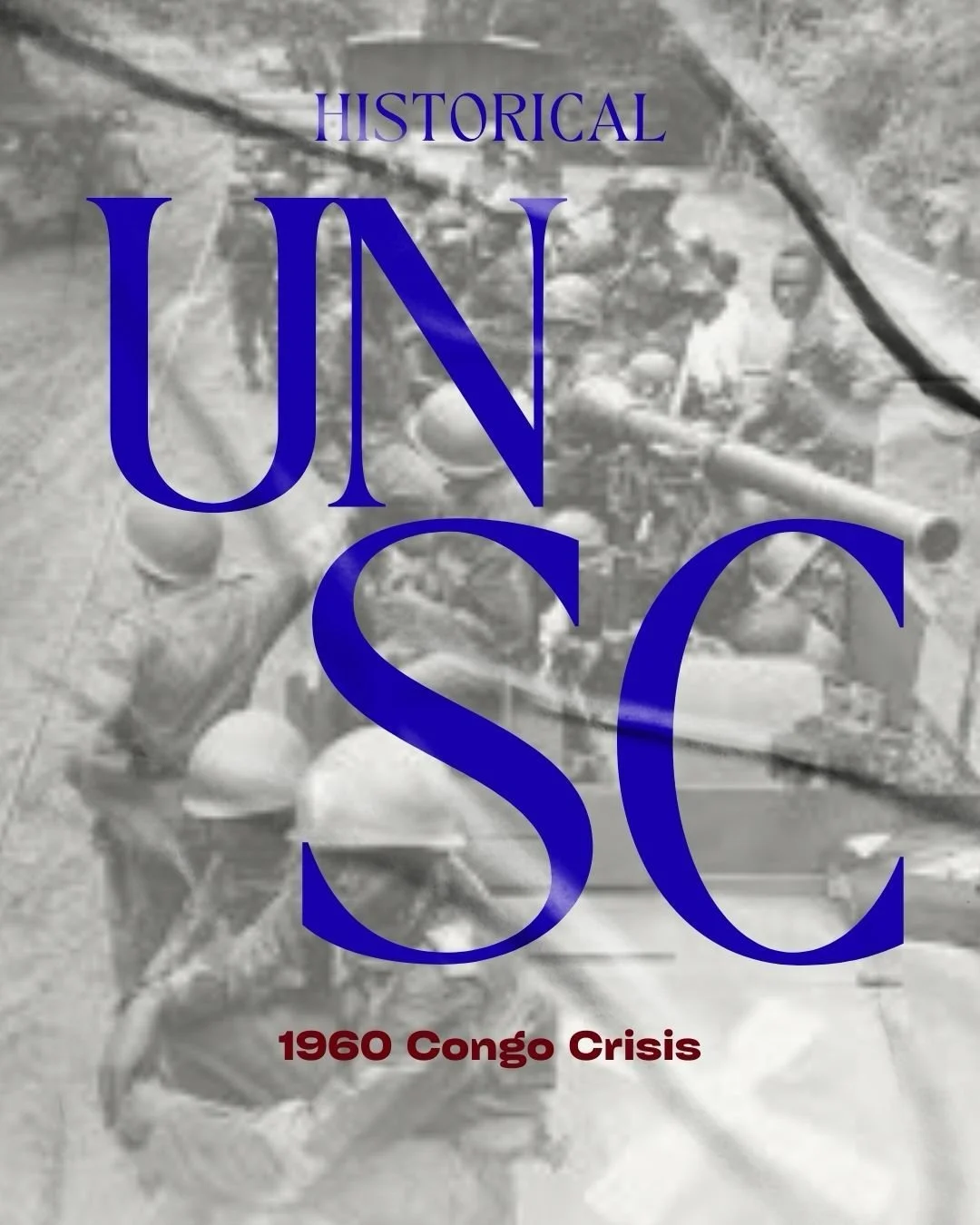
Historical United Nations Security council
(h-UNsc)
Under Secretary General: Umut Işık Usluyer
Academic Assistant: Melek Yılmaz
Agenda Item:
1960 Congo Crisis
Established in 1945, the United Nations Security Council is one, and the most powerful, of the six principal organs of the United Nations. Forged in the shadow of global war, its authority flows directly from the mandate entrusted to it, the preservation of international peace and security. Unlike any other UN body, the Council possesses the power to adopt decisions binding on all member states, authorizing sanctions, peacekeeping operations, and, when deemed necessary, the use of force. Yet this power has never existed in a vacuum. It operates within a world shaped by competing interests, ideological rivalry, and the constant tension between sovereignty and intervention. That tension eventually developed into a big crisis.
The year is 1960. Barely weeks after gaining independence from Belgium, the Democratic Republic of the Congo descended into chaos as army mutinies, secessionist rebellions, and foreign intervention tore the state apart. What began as a domestic collapse now threatens to ignite a wider Cold War confrontation in the heart of Africa. Convened under extreme urgency, the United Nations Security Council faces the daunting task of restoring order, defending sovereignty, and deciding how far the international community may go to prevent the Congo from becoming the next global flashpoint.